
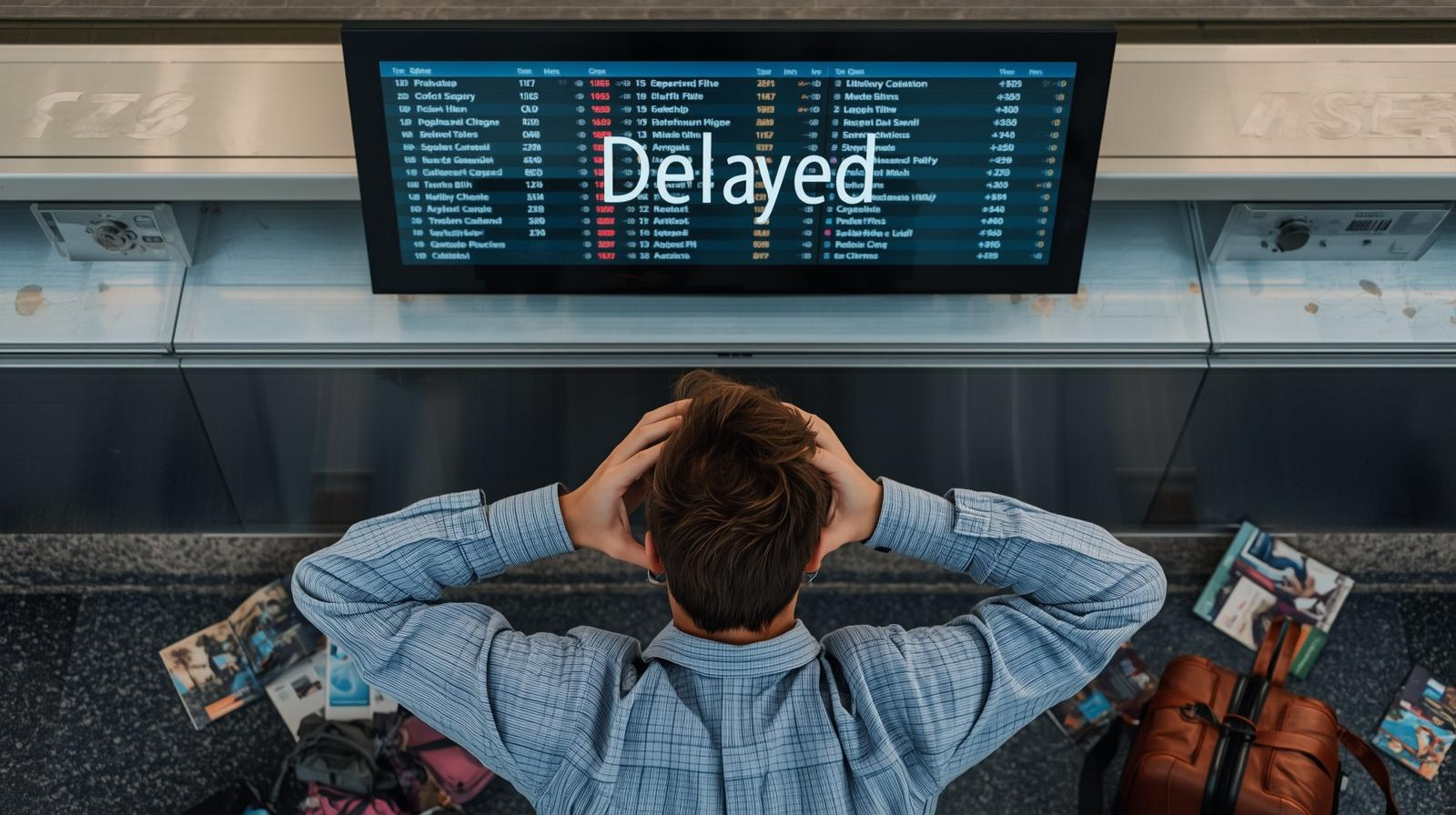
There are few things more disheartening than staring at a departure board as the word "Delayed" flashes in unforgiving amber letters next to your flight. The anticipation of a hard-earned holiday or the urgency of a business trip is instantly replaced by frustration, anxiety, and the looming question of how long you will be stuck in the terminal.
However, amidst the chaos of rescheduled itineraries and overpriced airport coffee, there is a silver lining. In the UK, robust passenger rights regulations exist to ensure that when your travel plans are significantly disrupted, you are not left entirely out of pocket. Understanding these rights is essential for any modern traveller. Let us dive into the intricacies of flight delay compensation in the UK, exploring when you are entitled to claim, how much you can expect, and the most efficient process to secure your rightful compensation.
Understanding Flight Delays in the UK
To navigate the claims process, one must first understand the legal framework. For years, European travellers relied on the steadfast protection of the EU261 regulation. Following Brexit, the UK enshrined these protections into domestic law, now commonly referred to as UK261.
These regulations apply to passengers departing from a UK airport on any airline, or arriving at a UK airport on a UK or EU airline. This means that whether you are flying from Heathrow to New York on British Airways, or returning from Malaga to Gatwick on EasyJet, you are covered under these comprehensive consumer protection laws. The core philosophy remains the same: airlines must take responsibility for severe disruptions that fall within their control.
When Are You Entitled to Compensation?
Not every delay warrants financial compensation. The regulations are designed to penalise airlines for substantial disruptions rather than minor operational hiccups. To be eligible for a claim, your situation must meet specific criteria:
- The 3-Hour Threshold: Your flight must arrive at its final destination more than three hours later than the originally scheduled arrival time. Note that it is the arrival time that matters, not the departure time. If a flight departs three hours late but makes up time in the air to arrive only two hours and fifty minutes late, you are not eligible.
- Airline Responsibility: The delay must be the airline's fault. This includes issues like routine technical faults with the aircraft, crew shortages, or poor scheduling.
- Relevant Jurisdiction: As mentioned, the flight must depart from a UK/EU airport, or arrive in the UK/EU on a UK/EU carrier.
For instance, if you are flying from Manchester to Tenerife and a crew member's late arrival causes you to land four hours behind schedule, you have a solid case for compensation.
Have You Experienced a Recent Delay?
Don't leave money on the table. If you've been delayed by more than 3 hours in the last few years, you could be owed hundreds of pounds in compensation. Check your flight instantly.
How Much Compensation Can You Claim?
The compensation framework under UK261 (mirroring EU261) is tiered based on the flight distance, rather than the ticket price. This means you could potentially receive more in compensation than you originally paid for a budget airline ticket. The standard tiers are as follows:
For short-haul flights under 1,500km (e.g., London to Paris).
For medium-haul flights between 1,500km and 3,500km (e.g., Manchester to Athens).
For long-haul flights over 3,500km, delayed by 4+ hours (e.g., London to Tokyo).
Note: The exact pound sterling amounts may fluctuate slightly based on prevailing exchange rates, as the legislation often references the historical Euro amounts.
What You Need to Know About Exceptions
Airlines are exempt from paying compensation if the delay was caused by "extraordinary circumstances". These are events deemed wholly outside the airline's control, no matter how carefully they manage their operations. Common extraordinary circumstances include:
- Severe and incompatible weather conditions (e.g., hurricanes, extreme snowstorms).
- Air traffic control strikes or unexpected restrictions.
- Security threats or acts of terrorism at the airport.
- Hidden manufacturing defects in the aircraft (though routine technical faults are not exempt).
Important: Overbooking a flight is a commercial decision made by the airline and is never considered an extraordinary circumstance. If you are bumped due to overbooking, you are entitled to compensation.
How to Claim Your Compensation
Filing a claim requires a systematic approach. While airlines have improved their portals, the process can sometimes feel deliberately opaque. Follow these steps to maximize your chances of a swift payout:
- Gather Documentation: Keep your boarding pass, booking confirmation, and e-ticket. Ask the ground staff for a written confirmation of the delay and its cause before you leave the airport.
- Contact the Airline Directly: Most major airlines have a dedicated claims form on their website under sections like "Passenger Rights" or "EU261/UK261 Claims". Submit your details clearly and attach copies of your documents.
- Escalate if Necessary: If the airline rejects your claim citing extraordinary circumstances (which you believe to be false), or ignores you for more than 8 weeks, you can escalate the matter to an Alternative Dispute Resolution (ADR) scheme or the Civil Aviation Authority (CAA).
- Use a Claims Management Company: If you prefer a hassle-free approach, numerous reputable organisations will fight the airline on your behalf on a "no win, no fee" basis. They typically take a percentage (around 25-30%) of the final payout, but they remove the stress of navigating legal red tape.
Conclusion
A severely delayed flight is an undeniably frustrating start or end to a journey. However, knowing your rights transforms you from a helpless passenger into an empowered consumer. The UK261 regulations are clear: airlines must be held accountable for operational failings.
If you have suffered a delay of more than three hours, take action. Gather your boarding passes, verify the cause of the disruption, and submit your claim. After all, your time is valuable, and the law ensures that it is treated as such. Safe—and hopefully punctual—travels!